
How to Choose, Change & Adjust a Watch Strap
The right watch strap makes your watch more comfortable, secure, and stylish. Whether you want to replace an old strap or give your watch a fresh look, choosing the correct size and material is important. Learning how to change a watch strap can also save you time and money. In this blog, we will explain how to choose a watch strap, measure the correct size, replace an old strap, and adjust it for a comfortable fit. With a few simple tools and easy steps, you can change most watch straps at home.
How to Choose the Right Watch Strap
If you are wondering how to choose the right watch strap, consider watch size, your wrist size, your preferred material, and daily activities. Before buying a replacement, check these important points.
Measure Your Watch's Lug Width
Lug width is the distance between the two small parts of the watch case that hold the strap. This measurement is important when following a watch strap size guide.
Here is how to measure watch strap size correctly:
- Look at the place where the strap connects to the watch case.
- Use a ruler with millimeter markings or a digital caliper.
- Measure the gap between the inside edges of the lugs.
- Choose a replacement strap with the same width.
Common watch strap widths include 18 mm, 20 mm, and 22 mm. However, your watch may need a different size. A strap that is too narrow may move around, while one that is too wide may not fit properly. Always check the lug width before buying a watch strap replacement.
Choose the Right Strap Material
The best watch strap material depends on your lifestyle, comfort, and personal style.
- Leather: Leather straps look smart and classic. They are ideal for office wear, meetings, and formal occasions. However, keep them away from water to prevent damage to the leather.
- Stainless steel: They are strong, stylish, and suitable for everyday use. They can last for many years with proper care.
- Rubber: Rubber straps are flexible, durable, and water-resistant. They are a good choice for sports watches and outdoor activities.
- Silicone: Silicone straps are soft, lightweight, and comfortable. They are mostly worn with casual wear and exercise.
- Nylon: Nylon straps are lightweight, breathable, and easy to clean. They are suitable for travel, outdoor activities, and daily wear.
- Perlon: Perlon straps are lightweight, breathable, and durable. Their woven nylon design makes them comfortable for everyday wear, travel, and outdoor activities.
If you want the best watch strap for everyday wear, choose a material that matches your routine.
Find the Correct Strap Length for Your Wrist
If you are wondering how to fit a watch strap, you should know that it should not be too tight or too loose. To measure your wrist, wrap a flexible measuring tape around it where you normally wear your watch. Record the measurement in millimeters or centimeters. Next, check the strap manufacturer's size guide. Some straps come in short, regular, and long sizes, so choose one that matches your wrist circumference.
A long strap may leave too much loose material, while a short strap may not reach the buckle comfortably. If you have leather straps, it is usually best if the buckle fits near the middle adjustment holes. Remember that the correct watch strap size depends on both the lug width and the strap length. Check both measurements before placing your order.
Match the Strap to Your Watch Style and Lifestyle
Match the strap to your watch but also to your lifestyle. For office wear and formal events, choose leather and stainless steel straps. For exercise, outdoor activities, and hot weather, use rubber and silicone straps for comfort. Use nylon straps when you travel and for casual daily wear.
What You Need to Change a Watch Strap
Before starting your watch strap replacement, collect the tools you need. Having the right tools makes the process easier and helps prevent scratches.
Spring Bar Tool and Other Essential Tools
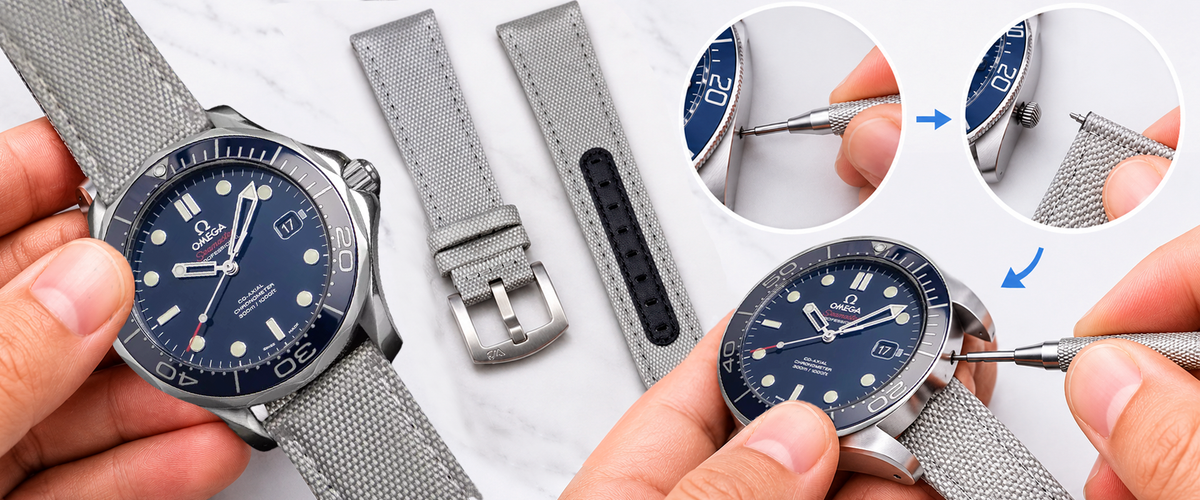
A spring bar tool is commonly used to remove and install watch straps. It has a small forked end that helps release the spring bar connecting the strap to the watch case.
You may also need:
- A soft cloth to protect the watch.
- A ruler or digital caliper to check the strap size.
- A small tray to keep the spring bars safe.
- A clean, well-lit work surface.
Using the correct watch strap changing tools reduces the risk of damaging the watch case or strap.
Quick-Release vs. Standard Spring Bars
Standard spring bars are small metal pins that hold the strap between the watch lugs. They usually require a spring bar tool to remove. Quick-release straps have a small lever on the underside. You can slide this lever with your finger to release the strap without using a separate tool. Quick-release straps are convenient, but you must still choose the correct lug width and make sure the new strap fits your watch.
How to Change a Watch Strap Step by Step

Learning how to change a watch strap is simple when you follow the correct steps. Most watches with standard spring bars can be changed at home.
Step 1: Prepare Your Watch and Work Surface
Place your watch face-down on a clean, soft cloth. Make sure your work surface is flat and well-lit. Keep your spring bar tool and replacement strap nearby. Check that the new strap has the correct width and compatible spring bars. Work slowly to avoid scratching the watch case.
Step 2: Remove the Old Watch Strap
To learn how to remove a watch strap, first locate the spring bar where the strap connects to the watch case.
- Insert the forked end of the spring bar tool between the strap and the lug.
- Gently catch the small shoulder of the spring bar.
- Push the spring bar in to release it from the lug hole.
- Carefully remove the strap from the watch.
- Repeat the process on the other side.
If your watch has a quick-release strap, move the small lever to release the spring bar. Do not use too much force. If the strap does not come off easily, check the position of the tool before trying again.
Step 3: Attach the New Watch Strap
Now it is time to learn how to attach a watch strap.
First, place the spring bar inside the new strap if it is not already fitted. Position one end of the spring bar inside the lug hole. Use the spring bar tool to push the other end inward. Place it between the lugs and carefully align it with the opposite hole. Release the spring bar so it locks into place. Repeat the process for the other side. Check the strap's direction before installing it. On most traditional watches, the longer strap section goes on the side opposite the buckle, but the design may vary.
Step 4: Check That the Strap Is Secure
After installation, check both ends of each spring bar. Make sure they are properly seated inside the lug holes. Pull the strap away from the watch case to check that it stays in place. Do not pull too hard gently. If the strap moves or comes loose, remove it and install it again. Never wear your watch until you are sure the strap is securely attached. A loose spring bar can cause the watch to fall and become damaged.
How to Adjust a Watch Strap for the Perfect Fit
Knowing how to adjust a watch strap helps you keep your watch comfortable throughout the day. The adjustment method depends on the type of strap you have.
How to Adjust a Leather or Rubber Watch Strap
Leather and many rubber straps have a buckle with several holes. To adjust the strap, move the buckle pin to a different hole. If the strap feels too tight, try a larger hole. If it feels too loose, try a smaller hole. The strap keepers hold the extra strap material in place. If the strap is too long or too short, consider buying a different length instead of cutting it. Some rubber straps are designed to be trimmed, but only cut them if the manufacturer allows it.
How to Adjust a Metal Watch Bracelet
Adjusting a metal bracelet may seem easy, but it is different from changing a regular watch strap. Metal bracelets often need links removed or the clasp adjusted. First, check whether the bracelet uses pins or screws to hold the links together. Use the correct tool for the specific fastening system. Some bracelets also have small adjustment holes on the clasp. These allow you to make minor changes without removing links. If you are unsure how the bracelet works, visit a watchmaker to avoid damaging it.
How Tight Should a Watch Strap Be?
A watch strap should feel secure and not press tightly on your skin. You should be able to slide your fingertip under the strap comfortably. The watch should stay in place without moving too much around your wrist. If the strap leaves deep marks, causes discomfort, or feels too tight, loosen it. Your wrist may also swell slightly during hot weather or exercise, so allow enough room for natural movement.
When to Visit a Watchmaker
You can adjust basic straps at home, but always trying by yourself may turn into a disaster. Don’t try it if you find it hard because some watches need professional help. Visit a watchmaker if your metal bracelet has complicated links, the spring bar is stuck, the attachment system looks unfamiliar, or the strap does not fit correctly. A professional will help with expensive watches and special bracelet designs, but if you try it yourself, don't make incorrect adjustments because it could cause damage.
Common Watch Strap Changing Mistakes to Avoid
When doing a watch strap replacement, avoid these common mistakes:
- Buying the wrong size: Always measure the lug width before ordering a new strap.
- Using the wrong tools: Sharp objects can scratch the watch or damage the spring bars.
- Forcing the strap into place: If the strap does not fit, check its width and compatibility.
- Ignoring the spring bars: Damaged or bent spring bars may not hold the strap securely.
- Skipping the final check: Always make sure the spring bars are properly locked into the lug holes.
- Adjusting a metal bracelet incorrectly: Identify whether the bracelet uses pins or screws before removing links.
Avoiding these watch strap fitting mistakes can help protect your watch and keep it secure on your wrist.
How Often Should You Replace a Watch Strap?
The right time for watch strap replacement depends on the material, how often you wear the watch, and how well you care for it.
Leather straps may need replacing when they become cracked, stiff, or damaged around the holes. Nylon straps should be replaced if they become frayed or weak. Rubber and silicone straps may need replacing when they develop cracks or lose their shape.
Metal bracelets can last for many years, but worn pins, loose links, rust, or a damaged clasp may require repair or replacement.
Check your strap regularly, especially around the buckle and the points where it connects to the watch case. Clean it according to the manufacturer's instructions and keep it away from harmful chemicals.
If you notice signs of damage, do not wait for the strap to break. Replacing a worn strap helps prevent your watch from falling and getting damaged.
Frequently Asked Questions About Watch Straps
How do you change a watch strap without a tool?
How do you know what size watch strap to buy?
Can you change the strap on any watch?
How do you adjust a watch strap at home?
How tight should a watch strap be?
Can you change a metal watch bracelet yourself?
Which watch strap material lasts the longest?

Hinterlasse einen Kommentar
Diese Website ist durch hCaptcha geschützt und es gelten die allgemeinen Geschäftsbedingungen und Datenschutzbestimmungen von hCaptcha.